How to Build a Home Fragrance Rotation (Like a Scent Wardrobe)
When an Apartment Smells Like One Note for a Year
Say there’s a vanilla reed diffuser in the living room. It’s fine. People say “smells nice” when they walk in. Then a friend visits for the third time and says: “Your place always smells like this, huh.” Not a complaint. More like noticing you’d worn the same shirt to every dinner.
That comment lands harder than it should. And it’s right — one scent, running 24/7, through every room and every mood. Monday morning coffee rush? Vanilla. Friday evening with wine? Vanilla. Sunday afternoon nap? Believe it or not: vanilla.
I didn’t dislike the scent. I’d just stopped noticing it. And that’s the real problem — when a fragrance becomes wallpaper, you’re paying for air freshener you can’t smell.
The Capsule Wardrobe, but for Your Nose
Fashion people figured this out years ago. Instead of a closet stuffed with clothes you never wear, a capsule wardrobe gives you a small set of pieces that work together and cover every situation. The same logic works for home fragrance.
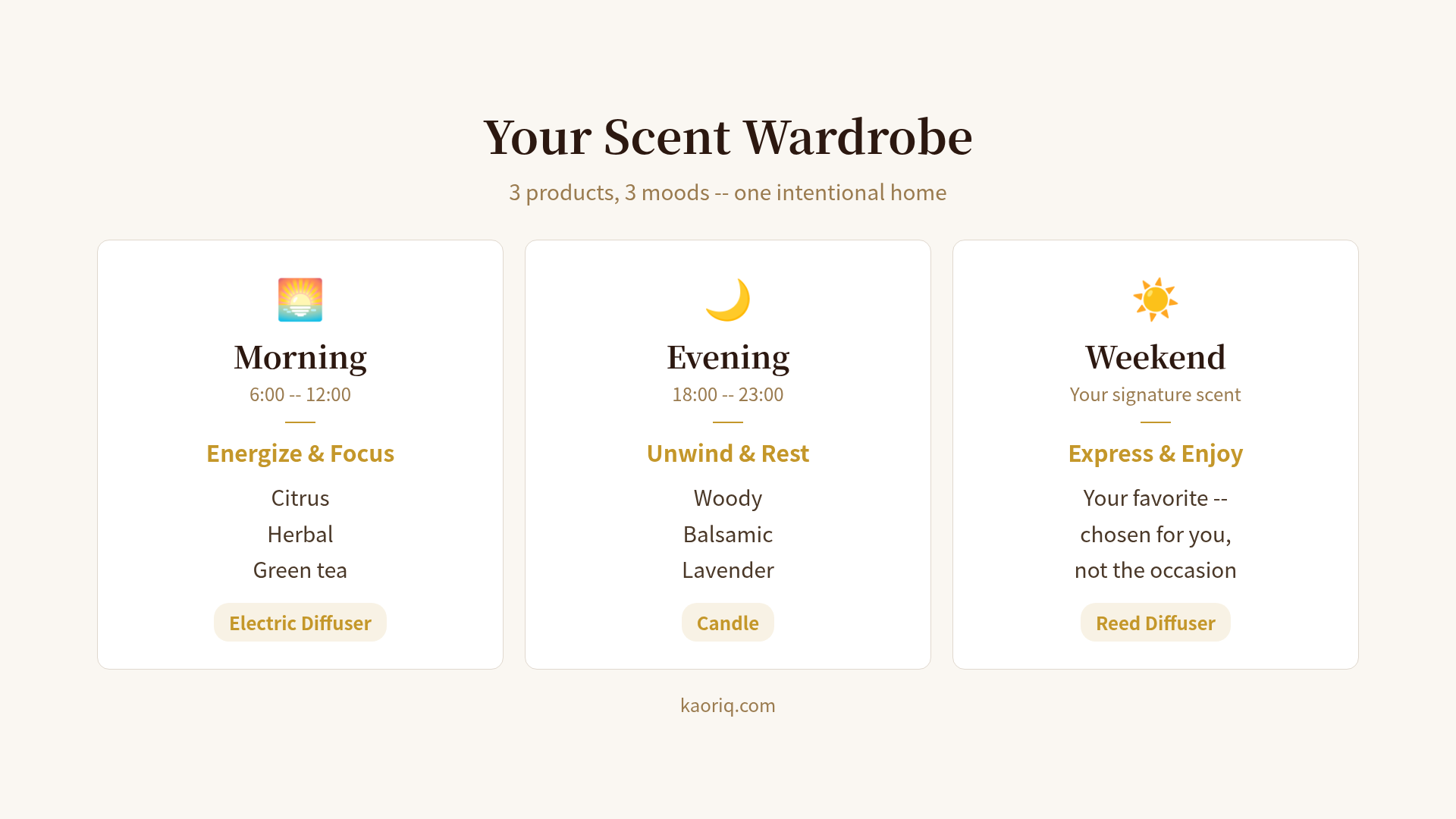
You don’t need twelve candles. You need three products that serve three different moments in your day. That’s it. Three.
(Yes, three. Not the beginning of a collection. Not a gateway to having an entire shelf of half-burned candles you feel guilty about. Three.)
Here’s the framework:
- Morning scent — something that helps you wake up and focus.
- Evening scent — something that signals the day is done.
- Weekend scent — something you light just because you want to.
Each one does a different job. Together, they keep your home from becoming olfactory wallpaper.
Morning: The Bright One
Your morning scent should feel like opening a window. Citrus, herbal, and green notes are natural fits — they’re light, they don’t linger heavily, and they pair with coffee rather than competing with it.
Fragrance families that work:
- Citrus: lemon, bergamot, grapefruit, yuzu
- Herbal: rosemary, basil, eucalyptus, mint
- Green: green tea, cut grass, cucumber
Best format: A reed diffuser or electric diffuser. You want something that runs without attention while you’re making breakfast and answering messages. Lighting a candle at 7 AM while half-asleep is an invitation to forget about it entirely.
How long it lasts: Reed diffusers give a gentle background note for weeks. An electric diffuser on a timer can run for your exact morning window — say, 6:30 to 9:00 — and shut off when you leave.
The goal isn’t to drench your kitchen in grapefruit. It’s a nudge. A small signal that says: we’re awake, we’re moving.
Evening: The Warm One
Evening is where most people already have something — a candle on the coffee table, incense after dinner. The difference is being intentional about making this scent different from your morning one.
Woody, amber, and vanilla notes work here because they’re heavier, slower, and more enveloping. They match the pace of a body that’s done working.
Fragrance families that work:
- Woody: sandalwood, cedarwood, hinoki, vetiver
- Amber/resin: amber, frankincense, myrrh, benzoin
- Warm sweet: vanilla, tonka bean, cinnamon (gentle — not holiday-cookie levels)
Best format: Candles or incense. This is the moment for ritual — striking a match, watching a flame, the visible curl of incense smoke. Lighting something tells your brain the workday is over in a way that flipping a diffuser switch doesn’t.
How long it lasts: A single candle session (2-3 hours) is plenty. Incense gives you 20-40 minutes of intense scent with a faster fade — good if you want fragrance during dinner but not while you sleep.
A cedarwood candle after a day of lemon reed diffuser feels like changing from a work shirt into a soft sweater. The contrast is the point.
Weekend: The Interesting One
This is the fun slot. No rules — just pick something that makes you happy when you have nowhere to be.
Florals, complex blends, and unusual notes all belong here. This is where you burn the candle you bought on vacation, or light the incense a friend brought back from Kyoto. Weekend scents earn their place by being different, not by being practical.
Fragrance families that work:
- Floral: rose, jasmine, neroli, ylang-ylang
- Complex blends: oud + rose, fig + bergamot, tobacco + honey
- Unusual notes: matcha, leather, petrichor, tatami
Best format: Whatever you enjoy most. A nice candle in a ceramic vessel. A Japanese incense stick. A nebulizer diffuser if you want to fill the whole apartment with something dramatic. The weekend slot is about pleasure, not efficiency.
How long it lasts: As long as your Sunday feels like lasting.
The Cheat Sheet
| Morning | Evening | Weekend | |
|---|---|---|---|
| Mood | Alert, fresh | Calm, grounded | Indulgent, curious |
| Fragrance family | Citrus, herbal, green | Woody, amber, warm | Floral, complex, unusual |
| Best format | Reed diffuser, electric diffuser | Candle, incense | Your favorite |
| Session length | Continuous background | 2-3 hour window | As long as you like |
| Effort | Zero (set and forget) | Low (light it, enjoy it) | None (this is a treat) |
Seasonal Adjustments (Light Touch)
You don’t need to overhaul your rotation four times a year. Just nudge it.
Summer: Swap your morning citrus for something even lighter — cucumber, or a single-note lemon. Move your evening candle to a less intense option: vetiver instead of heavy amber. Heat helps scent travel, so you can pull back and still notice it.
Winter: Go richer. Morning can shift from straight citrus to a citrus-and-spice blend — bergamot with cardamom works well. Evening earns the heavy amber and frankincense. Cold air absorbs fragrance faster, so you can afford to be bolder without overwhelming the room.
Spring and fall: The in-between seasons are where your weekend scent gets to play starter. That fig-and-bergamot blend might become your new evening regular. Rotate pieces up and down based on what’s working.
The Three Rules
1. Contrast beats quality. A $15 citrus reed diffuser in the morning and a $30 cedarwood candle in the evening will feel more considered than a single $80 luxury candle running all day. The shift between scents is what your nose actually notices.
2. Give your nose a gap. Don’t run morning and evening scents in the same room at the same time. Let at least 30 minutes of unscented air sit between them. Turn off the diffuser before you light the candle. The pause makes each scent land fresh instead of muddling into a confusing middle.
3. Replace one at a time. When your morning diffuser runs out, try a different citrus or herbal note. Keep the evening and weekend slots stable. Changing one thing lets you figure out what you actually prefer. Changing everything at once teaches you nothing.
Where to Start
If you already own one home fragrance product — and most people do — you already have one-third of a scent wardrobe. Decide whether it’s your morning, evening, or weekend scent. Then add the one that creates the most contrast.
If your current product is a woody candle, add a citrus diffuser for mornings. If it’s a floral reed diffuser, add a warm candle for evenings. Not sure which format fits your space? We wrote a guide on matching fragrance formats to room sizes that covers the practical side.
Two products is enough to start feeling the difference. The third is next month’s excuse to go back to the shop.
Was this article helpful?